Build a search-to-customer system that does more than generate rankings.
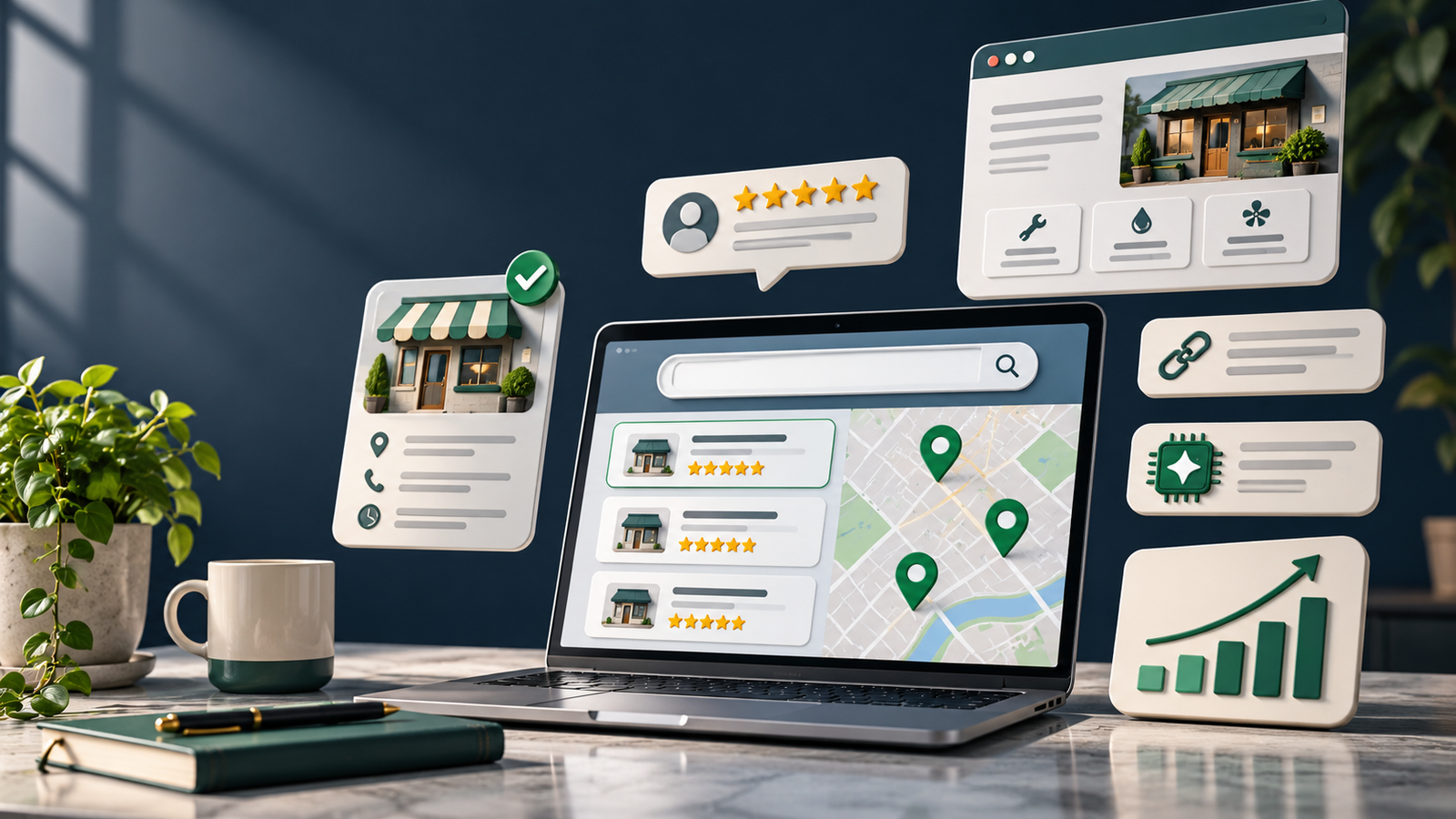
Traffic is useful. Qualified enquiries are better. Booked customers are what keep a business growing.
Imagine two businesses in the same city offering the same service. One spends every month on ads to remain visible. The other has built a strong Google Business Profile, useful service pages, a reliable reputation and a fast response process. Both may get enquiries, but the second has another acquisition channel working alongside its paid campaigns.
That is the real opportunity in local SEO. Not simply reaching the first page of Google, but building a system that connects search intent → local visibility → trust → contact → follow-up → revenue.
Below is a practical way to build that system in 2026, whether you run a clinic, home-service company, legal practice, agency or other service business.
1. Start with searches that have commercial intent
Publishing dozens of generic blog posts is not necessarily the fastest way to generate revenue. Begin with the problems customers are trying to solve and the services they are ready to buy.
A dental clinic might focus on “emergency dentist in [city]” and “dental implants consultation [city].” A plumbing business might prioritize “blocked drain repair near me” over a broad informational query like “how plumbing works.” A managed IT provider might target “Microsoft Teams phone migration services” instead of “what is cloud computing.”
Build a simple keyword map with four columns: service, search phrase, intended page and conversion action. Match one clear intent to each main page. Use Search Console, actual customer questions, CRM notes and keyword research tools to refine the map.
Practical check: If a visitor lands on this page, can they tell within five seconds whether you solve their problem and how to reach you?
Search-intent example: “Emergency plumber near me” suggests someone needs a service now, while “how does a water heater work” is generally a research query. Build the page and CTA around the intent—not just the search volume.
2. Make your Google Business Profile accurate and useful
For businesses eligible for a Google Business Profile, local search can be the first place a customer encounters the brand. Google says its local results primarily consider relevance, distance and prominence. There is no legitimate shortcut that guarantees the top position for every searcher.
Start with the fundamentals:
- Choose the most accurate primary business category; add relevant secondary categories and real services.
- Keep the business name, phone, website, location or service area, and opening hours accurate.
- Add authentic photos showing the team, premises or work where appropriate.
- Link to a relevant website page that explains the service and makes contacting you easy.
- Answer customer questions clearly and keep business information up to date.
Do not create fake locations, keyword-stuff the business name, or list hours when nobody actually serves customers. A misleading listing may attract clicks, but it undermines trust and can violate platform rules.
3. Build pages for services, not pages for search engines
A strong local website answers three questions: What do you do? Who is it for? Where can you help?
Your most valuable services deserve dedicated pages when they serve genuinely different customer needs. An electrician’s emergency callout page should not read like its full-home rewiring page. A clinic’s treatment page should explain the relevant consultation, suitability, process, frequently asked questions and next step.
A high-performing service page typically includes:
- A specific page title and heading using the service’s natural language.
- A concise explanation of the problem and the service offered.
- Relevant service-area information, only where the business genuinely operates.
- Evidence such as qualifications, authentic reviews, project photos or case examples.
- Visible contact options, simple forms and a clear booking action.
- Helpful internal links to related services and practical FAQs.
If you create location pages, make each one useful to people in that location. Swapping only a city name across dozens of near-identical pages risks creating doorway pages rather than helpful resources.
4. Treat your website as a conversion tool
A first-page ranking means little if prospective customers cannot contact you.
Review the mobile experience as a real customer would. Is the phone number tappable? Is the booking button easy to find? Does the page load well on a normal connection? Are forms short enough for a person in a hurry? Does the thank-you page explain what happens next?
For high-consideration services, give visitors more than one sensible way to convert. Someone may want to call immediately, while another needs to book a consultation or ask a question first.
The important distinction is friction: every unnecessary click, confusing field or vague promise can reduce the chance that interest turns into a conversation.
5. Earn trust through reviews and credible mentions
Reviews matter because potential customers use them to judge whether a business is reliable. Google also identifies review volume and positive ratings among factors that can help local ranking, but reviews are not a single-factor ranking formula.
Use a straightforward process: ask genuine customers for honest feedback after a completed service, provide a direct review link, and respond professionally. Avoid incentives in exchange for reviews or attempts to filter out negative experiences.
Beyond reviews, build a consistent online presence. Relevant local associations, industry directories, supplier relationships, partnerships and press mentions can help customers discover or verify the business. Prioritize accuracy and relevance over purchasing hundreds of low-quality directory listings or backlinks.
6. Prepare for AI-assisted discovery without chasing gimmicks
People increasingly encounter businesses through more than traditional blue links: map listings, rich results and AI-generated search experiences can all influence discovery.
Google’s own guidance says established SEO fundamentals continue to apply to its AI search features. There is no special trick that guarantees an AI system will recommend your business.
Make your website easy to understand by clearly stating:
- The exact services you provide and the customers you serve.
- The locations where you actually operate.
- Pricing context, eligibility, timing or process, where appropriate.
- The people and organization behind the service.
- Evidence and answers to the questions buyers ask before contacting you.
Keep important content available as readable page text rather than hiding it entirely in images. Test how your business appears in major search experiences, but treat those checks as directional—not as proof of guaranteed future recommendations.
7. Fix the follow-up gap before buying more traffic
This is where local SEO becomes a business system, not just a marketing channel.
Consider a customer who finds you on Google, submits a form and receives no reply until the next afternoon. Better rankings will not solve that problem. They will simply generate more opportunities to lose.
Connect enquiry forms, calls and booking actions to a CRM or lead-management process. Assign an owner, acknowledge enquiries promptly, track whether appointments are confirmed and set reminders for sensible follow-up.
For example, a clinic could route treatment-specific enquiries to the correct team, send a confirmation message and trigger an appointment reminder. A home-service company could flag emergency calls separately from estimates. The purpose is to help a real person respond effectively—not to spam prospects with automation.
The conversion chain: Search → Visit → Enquiry → Fast response → Qualification → Booking. Measure where the handoff breaks before increasing ad spend.
8. Measure what matters: from impressions to customers
A dashboard full of impressions can look impressive while the calendar remains empty. Track the whole journey instead.
| Stage | Useful metric | Why it matters |
|---|---|---|
| Discovery | Organic impressions and local search visibility | Shows whether relevant people can find you |
| Interest | Service-page engagement and relevant clicks | Shows whether the content matches the need |
| Enquiry | Qualified calls, forms and booking requests | Shows whether search exposure becomes demand |
| Sales | Appointments attended and customers won | Shows whether leads become business |
| Economics | Cost per acquired customer and revenue | Shows whether the channel is sustainable |
Use Search Console, web analytics, call tracking where appropriate, and CRM data. Label leads by service when possible. A business that gets ten relevant enquiries for a valuable service may perform better than one attracting hundreds of visitors who were never likely to buy.
A practical 30-day local SEO action plan
Audit demand and visibility
Identify the three services most worth winning, map purchase-intent searches, review your existing rankings and inspect your Google Business Profile.
Improve the conversion path
Update your most important service pages, clarify the offer, fix the mobile call-to-action and test every form and tracking event.
Strengthen trust
Correct inconsistent business information, create a compliant customer-review request process and add authentic proof to service pages.
Connect and measure
Test lead handoffs, speed up follow-up, review enquiry quality and choose the next page or location based on evidence.
Thirty days is enough for meaningful operational improvements—not a guaranteed Google ranking.
Frequently asked questions
Is SEO better than Google Ads for local businesses?
Neither wins in every situation. Ads can generate immediate exposure while organic search can build a longer-lasting discovery channel. The strongest choice depends on margins, customer value, search demand, competition and how quickly the business needs leads. They often work best together.
How long does local SEO take to work?
Some profile corrections or conversion fixes may show operational benefits quickly. Ranking improvements and durable organic growth often require sustained work and vary widely by market. Avoid anyone guaranteeing a number-one position within a fixed timeframe.
Does every service area need its own page?
No. Create distinct location pages only when they provide substantial, genuinely local value. Near-identical pages created mainly to target city-name variations may fall under Google’s spam policies.
Can ChatGPT or Google AI guarantee leads to my business?
No. Clear factual content and credible online information can make a business easier to understand, but no business is guaranteed inclusion or a specific position in AI-generated answers.
Final thought: visibility is only the beginning
Local SEO works best when the search result, website, sales team and follow-up process tell the same story. A person looking for help should find the right service, understand why they can trust you, contact you without friction and receive a useful response.
The goal is not to win a screenshot of a ranking. The goal is to create a repeatable path from search to customer.
If you want a clearer view of where your local search, website or follow-up system is losing qualified enquiries, explore my digital marketing and SEO services.
